Monday, December 12, 2016

Acceptance: The dystonia challenge

“Acceptance doesn't mean resignation. It means understanding that something
is what it is and there's got to be a way through it."
~ Michael J. Fox ~

Dystonia can alter the course of our life from subtle to dramatic ways, but it need not be how we define ourselves. Reaching the point where we can be at peace with this when living with such difficult symptoms is one of the hardest things we will ever do, but dystonia is not the definition of our life. It is not the book of our life. It is just one chapter of our life among many other chapters.

Work hard every day to think about your life right now and not the life you once had. This is the way everyone should live, dystonia or not. The past is over and as much as you may miss your former self, you must let go and live in the present.

Focus on things just as they are; not the way you think they should be. The changes that can come out of this acceptance are incredible. Take each day one at a time and fully embrace even the most seemingly minor accomplishments. Frankly, given our challenges, the things we do now are much greater accomplishments than before dystonia when everything was much easier. Honor yourself for this! With what many have to deal with, sometimes just getting out of bed is an accomplishment. Please acknowledge this!


Saying how much we hate dystonia won’t make it go away. I promise! Instead, find a way to cohabitate with it because no amount of anger will ever take it away. This has been one of the most important things I have learned (still learning) to better manage all of the symptoms that come with my dystonia, physical, mental, and otherwise. I had to learn to live with it rather than fight with it. The more I do this, the less power it has over me. This might sound counterintuitive, but it might be the best way for us to find peace and healing. Stop waging war on your dystonia. You will only get worse.


I had years of ruthless symptoms where I could barely speak sometimes because of the breathtaking pain, to starting a business, becoming a certified life coach, and writing a book. I still deal with some pretty rough symptoms, but my mind is in a better place where I am more at peace with how things are. This leads to greater acceptance and a greater ability to be more productive.

I am not near as productive as I once was and would like to be, but beating myself up over this is a complete waste of time and energy. I would rather focus what energy I have on my abilities, rather than all that is wrong with me. I invite you to do more of the same. Accept what is rather than dwell in the past or on everything you can't do. Focus on your abilities. I know most of you do more than you give yourself credit. Please shift your mindset and celebrate yourself!


We all have periods when we feel overmatched and not up to the challenges, but we always get through the day. If you have a racing mind full of questions and concerns, please reach out to the many forums, support groups in your area, and dystonia organizations to talk with others who can relate. Dystonia can be distressing and exhausting. Share what you are thinking and feeling. Listen to what others are saying. You will find that you are far from alone.

You need not feel any shame. You have done nothing wrong to be in this situation. Take control and do what is best for you in order to better manage today, and just today. Tomorrow will take care of itself.


It is not what happens to us in life that defines us. It is what we do with it that defines us. 

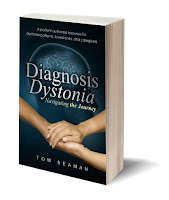
Tom Seaman is a Certified Professional Life Coach in the area of health and wellness, and author of the book, Diagnosis Dystonia: Navigating the Journey, a comprehensive resource for anyone suffering with any life challenge. He is also a motivational speaker, chronic pain and dystonia awareness advocate, health blogger, and volunteers for the Dystonia Medical Research Foundation (DMRF) as a support group leader, for WEGO Health as a patient expert panelist, and is a member and writer for Chronic Illness Bloggers Network. To learn more about Tom’s coaching practice and get a copy of his book, visit www.tomseamancoaching.com. Follow him on Twitter @Dystoniabook1 and Instagram
http://www.diagnosisdystonia.com/


Tuesday, November 29, 2016

After the diagnosis/Self harming thoughts

After being diagnosed with dystonia and learning it is not a temporary problem (or if you have lived with it for years and are feeling fed up), experiencing fear, anger, depression, and anxiety is normal. We not only experience the painful physical symptoms and the loss of competency, we have many questions.

How will it affect my life? Is it curable? Will it get worse? Will it get better? How is it treated? What will treatments cost? Do I have to take medication or have surgery? Will the pain ever go away? Will I have it the rest of my life? Is it all in my head? How did it happen? Was it my fault? Will I still be able to work? Will I be able to take care of my family?

The questions are endless and not all of them can be easily answered or answered at all. This can lead to panic and anxiety which will make symptoms worse, so please be careful. Seek answers one at a time so you are not overwhelmed trying to solve everything at once. Prioritize your concerns.


Developing a chronic condition is not like a sprained ankle or a case of the flu, both of which we heal from and return to normal. Chronic conditions are entirely different. They stay with us all day, every day, with no expected recovery time. Both mentally and physically, most of our energy is directed towards reducing symptoms and controlling panic about what it means for our future.

At my worst, my energy was strictly on how I could end the ridiculous pain. Literally, nothing else mattered. It was a very scary and confusing time for me because I felt so lost and alone. I kept telling myself to be patient; that I would find my bearings. Eventually I did, but not before other thoughts crept in.

Suicidal ideations
Dystonia cannot be wished away so a lot of us experience intense fear, anger, and sadness. Where anger and fear exist, anxiety, isolation, and depression often follow. Add physical pain and a sense of helplessness and life can lose all meaning. If these feelings persist, the most perverse thought one can have is suicide.

I thought about suicide. I no longer do, but when my pain was severe and my neck and back muscles would not stop contracting and twisting, it crossed my mind. I would say that I wanted to die, but I never talked about my actual suicidal thoughts with anyone. I was afraid. It seemed taboo.

I wish I did because I really needed some perspective about what I was feeling. There was no shame in feeling the way I did, but in the moment I was confused and afraid. I didn’t know who to talk to or what to say. Looking back, I could have talked to family members, friends, therapists, and others with dystonia. I now know that would have helped a lot!


Thoughts of self harm passed when I learned more about dystonia, treatment options, coping tools, stress management techniques, and finding out that there were others who felt just like me. I wasn't alone!

It also helped when I began to focus on the things I could do versus all I had lost. It took great mental fortitude to find meaning in my life, but I did and it grew as more time passed. There is meaning to your life as well, no matter how much suffering you experience. Please have faith and be patient with yourself!

If you have any thoughts of suicide, please speak to someone. It is not uncommon in the dystonia community to have these thoughts so please have the courage to speak about it, whether it be at your local support group or the many online support groups primarily found on Facebook. You will not only be doing yourself a big favor, but others as well by opening the door for them to feel comfortable talking about it. If you are in the United States, you can also call the National Suicide Prevention Lifeline (1-800-273-8255).

None of us are immune to the challenges of life. At some time or another we all endure tough experiences. When adversity comes, how we respond to it determines what happens next. Life experiences become tragedies if we make the conscious decision to make tragedies out of them. We can either resist or we can accept challenges. If we choose to view all challenges as opportunities for personal growth, they can be a driving force for positive changes.


Tips for dealing with your diagnosis:

  • Research your area and surrounding areas for quality people who treat dystonia.
  • Respect your dystonia and know your limitations. Learn to listen to your body.
  • Educate yourself about dystonia as much as possible and become your own best health advocate.
  • Understand that this journey requires trial and error, and patience.
  • Trust that life will continue for you regardless of this challenge.
  • Trust that you will get better if you are true to yourself and follow the treatment path that works best for you.
  • Don’t make getting better your entire life’s mission to where you feel no other purpose.
  • Stay connected and involved with family, friends, and community.
  • Get involved with support groups. Seek help from others and learn how to help them as well. Helping others is a big part of healing.
  • Stop asking "Why me?" and start asking "Why not me?" Opportunity lies in all good fortune and all misfortune.
  • Spend time in prayer and meditation.
  • Be kind to yourself and others.

Tom Seaman is a Certified Professional Life Coach in the area of health and wellness, and author of the book, Diagnosis Dystonia: Navigating the Journey, a comprehensive resource for anyone suffering with any life challenge. He is also a motivational speaker, chronic pain and dystonia awareness advocate, health blogger, and volunteers for the Dystonia Medical Research Foundation (DMRF) as a support group leader, for WEGO Health as a patient expert panelist, and is a member and writer for Chronic Illness Bloggers Network. To learn more about Tom’s coaching practice and get a copy of his book, visit www.tomseamancoaching.com. Follow him on Twitter @Dystoniabook1 and Instagram


Monday, November 14, 2016

Drink up for pain, inflammation, and weight loss!

People often ask what I eat since nutrition is very important to me, especially as it relates to helping control pain and other symptoms of dystonia. I also used to weigh well over 300 pounds so when people learn that I lost around 150 pounds, “how did you do it?” is a common question. Below are pictures with my nephew from 2006 and 2016. I shrunk and he grew! Frankly, I barely recognize the version of me on the left. It's as if that were a different life, one filled with deep emotional and physical pain from a life turned on its axis when dystonia enveloped my entire world.


In an attempt to keep this brief, I don’t want to go into great detail about everything I eat. More about my personal eating habits and nutrition as it relates to pain, dystonia, and weight management is in my book. For now I want to focus on two healthy drinks I have daily that I think will be of help, no matter your situation in life. One is a protein drink and the other is an anti-inflammatory drink. These drinks supplement my regular diet of food.

Every morning for breakfast I have a fruit smoothie protein drink. I want to stress “protein” because many people will have a fruit smoothie and leave out this vital ingredient. Protein is critical for keeping blood sugar stable, among many other functions.

This smoothie is easy to make, easy to drink, and easy to clean. From start to finish, I can be done with all of it in less than 15 minutes. I mention this because for many people who have chronic pain and/or dystonia and other movement disorders, preparing food, eating, and cleaning up can be a major challenge. For most people, this drink is an easy, healthy option. It is the main reason I began making it. The pain in my neck and back was too unbearable to prepare and eat anything else. I also had trouble swallowing food.

To make preparation even easier, you can put all your ingredients for one drink in separate bags and store them in the freezer. Just grab a bag, put the contents in your blender, add liquid, and away you go! See further below under the list of ingredients.


Ingredients
1 banana
10-12 oz. frozen berries (blueberries, blackberries, raspberries, cherries, strawberries)
20-30 raw almonds (I keep my almonds soaking in fresh water in the refrigerator. Soaking nuts, seeds, beans, and grains helps to release a substance called phytic acid, which blocks the absorption of essential minerals such as iron, zinc, calcium, and magnesium)
Protein powder (I like plant based protein powders so I use pea protein powder. I always use unflavored powders to ensure there is no added sugar or sweetener, but use whatever powder you like)
1-2 tablespoons chia seeds (Check them out! Chia seeds are a major superfood!)
1 teaspoon ground cinnamon (Cinnamon is an awesome anti-inflammatory, loaded with antioxidants, good for heart health, and helps regulate blood sugar, among many other things) 
Water (I use water to keep calories down and because I am not a dairy drinker)
Mix in blender, Nutri-Bullet, Ninja Blender, Vitamix, etc.

Pre-made smoothie bags

I have this drink for breakfast, but it is ideal for any meal or in between meals. It is filled with healthy protein, carbohydrate, fat, fiber, and antioxidants. It also has a low glycemic index and is low in calories. You can also make it and take it with you if you are a person on the go.

I call my other drink a “ginger/apple blast”, which I have during the day. I drink it for the anti-inflammatory properties found in ginger root. I add apple because of its health properties and I like the ginger/apple taste, but any fruit will do. I use spinach or kale to add more vitamins, minerals, and fiber to my diet.

Ingredients
Fresh ginger root sliced (about the size of a lime, which for some is a hefty amount, but use as much as you like per your taste)
1 small apple sliced
1 cup fresh spinach or kale
1/2 teaspoon ground cinnamon
Water
Mix in blender, Nutri-Bullet, Ninja Blender, Vitamix, etc.


Ginger is most well-known for stomach discomfort, but it is also one of the most powerful natural anti-inflammatory foods available. Ginger also has an anti-diabetic affect and cholesterol lowering properties, as well as many other health benefits. It also helps crave hunger. Turmeric/curcumin is another fantastic option, but my preference is ginger which is easier to find in most grocery stores.

As an example of the potency of ginger, years ago I had very bad knee pain from playing baseball in college. I was a catcher and developed tendonitis in both knees. I also broke both ankles twice. When I graduated, I had a desk job. Every time I got up I was in too much pain to walk upright until about the 10th step. Less than a month after having this drink every day, I was practically pain free and able to walk without a problem. I was amazed! When pain from dystonia set in a few years later, I knew I had to turn to ginger again and it has done wonders for my neck and back. I am not suggesting you will experience the same satisfaction, but please consider the possibility of this powerful food. It helps if your overall diet and lifestyle are healthy.

These are just 2 ideas among MANY healthy drink options, so choose ingredients you like best. The important thing to keep in mind is to eat healthy sources of protein and carbohydrate, healthy fat, fiber, and foods with a low glycemic index.

Happy drinking! Cheers! Salud! À votre santé! L'chaim! Prost Zum wohl! Na zdravi!

Tom Seaman is a Certified Professional Life Coach in the area of health and wellness, and author of the book, Diagnosis Dystonia: Navigating the Journey, a comprehensive resource for anyone suffering with any life challenge. He is also a motivational speaker, chronic pain and dystonia awareness advocate, health blogger, and volunteers for the Dystonia Medical Research Foundation (DMRF) as a support group leader, for WEGO Health as a patient expert panelist, and is a member and writer for Chronic Illness Bloggers Network. To learn more about Tom’s coaching practice and get a copy of his book, visit www.tomseamancoaching.com. Follow him on Twitter @Dystoniabook1 and Instagram

Tuesday, November 1, 2016

Our mind: As powerful as any drug

Did you know that we have chemicals in the brain as powerful as drugs for pain, depression, anxiety, and other conditions? Among them are neurotransmitters called endorphins, serotonin, oxytocin, and dopamine, which are often referred to as the "feel good" or "happy" chemicals. Let's play around with endorphins...the body's natural pain killer (our own private narcotic!). Endorphins affect us like codeine and morphine by blocking a cell's transmission of pain signals, but without the addiction. The word endorphin derives from two words - endogenous (from within) and morphine.


In addition to decreased feelings of pain, secretion of endorphins leads to feelings of euphoria, modulation of appetite, enhancement of the immune response, and fewer negative effects of stress. Endorphins are popularly associated with “runner’s high”, but no need to worry if you don’t run. There are numerous ways to increase production of these potent brain chemicals besides strenuous workouts. These include but are not limited to the following:

Massage
Acupuncture
A good movie
Prayer
Positive thinking/affirmations
Physical exercise
Music and dancing
Laughter (even fake laughter does the trick! The brain doesn’t know the difference between real or fake laughter. Even the anticipation of something funny releases endorphins)
Regular sleep/wake cycle
Shopping
Fun hobbies (arts and crafts, photography, beadwork, quilting, cooking, nature walks)
Quality time with family and friends
Sex (including cuddling, kissing, and holding hands with a romantic partner)
Good deeds (the flood of endorphins and serotonin caused by being generous has been called “helper’s high”)
Reading a good book
Meditation and controlled breathing exercises (breathe through your stomach; not your chest)
Being around animals
Sauna/hot tub
Biofeedback
Alcohol (light drinking; heavy drinking negates the effect)
Nutrition (anti-inflammatory foods)
Sunlight

Practically all of these things are at our disposal, so we should try and take advantage of them as much as we can. Not all of them will be of help (or interest) to everyone, but I wanted to share many of the options available to us. I also recognize that when in pain and feeling mentally down (I have been there!!), these things are not always easy to do or yield results the first or first few times doing them. If this is the case for you, maybe start with one thing you enjoy and do your best to make it part of your lifestyle.

Perhaps before starting there, practice the art of appreciation and gratitude. This is a great first step when we are suffering, most of which comes from expectation. Most of us have a blueprint for how life should be and when it isn't how we planned, it can cause depression. If this is the case, focus on something or someone you appreciate, do your best to sit with that feeling, and then move forward with hopefully more peace in your heart. Anything that gets us looking outward and/or releasing pent-up feelings has the potential of helping.


People often ask me the different ways I manage my chronic pain associated with dystonia, and I usually list many of these things. I can't say for sure how much they play a role, but when I did not do these things on a regular basis, pain was more severe. I was also depressed and anxiety ridden, a far cry from the person I was pre-dystonia, and a far cry from the person I am now, thanks to many of these things.

A fun fact to keep in mind is that neutral or positive sensory messages travel through the nervous system faster than painful messages. More specifically, soothing sensations travel up to seven times faster than sharp or burning pain. This means that if soothing sensations and painful sensations reach the “pain gate” to the brain at the same time, the pleasant sensations will prevail, blocking the slower, painful ones.1 In other words, to reverse the course of pain and depression, it helps to do things that consistently provide reliable pleasant body experiences that compete successfully with pain (i.e., activities that produce endorphins, oxytocin, serotonin, and dopamine).

An easy way to remember how to harness the power of the brain's natural drugs is to live by the popular saying, "Sing like no one is listening, dance like nobody's watching, love like you've never been hurt, and live like it's heaven on earth."

In other words, have fun and do your best to not care so much what others think about you. Live your life on your terms. Never give up. Be patient with yourself. Never lose hope. Trust that everything will always work out. All of it is easier said than done, but when we get the "feel good" hormones flowing, nothing and no one can ever take away our peace of mind and body.

1) Phillips, M. (2007) Reversing Chronic Pain. North Atlantic Books: Berkeley, CA

Tom Seaman is a Certified Professional Life Coach in the area of health and wellness, and author of the book, Diagnosis Dystonia: Navigating the Journey, a comprehensive resource for anyone suffering with any life challenge. He is also a motivational speaker, chronic pain and dystonia awareness advocate, health blogger, and volunteers for the Dystonia Medical Research Foundation (DMRF) as a support group leader, for WEGO Health as a patient expert panelist, and is a member and writer for Chronic Illness Bloggers Network. To learn more about Tom’s coaching practice and get a copy of his book, visit www.tomseamancoaching.com. Follow him on Twitter @Dystoniabook1 and Instagram
http://www.diagnosisdystonia.com/

Saturday, October 22, 2016

From severe chronic pain and morbid obesity to a joyful bike rider!

When you look at the picture below, you see a regular guy riding a bicycle; and that would be correct. I am pretty much just a regular guy doing a regular, everyday activity. However, this wasn’t always the case. What you don’t see in this picture is a former morbidly obese, depressed, angry guy in severe, chronic pain.


When dystonia entered my life, everything stopped, or seemed to stop, as everything I did was no longer possible for me to continue. Work couldn’t be done. My masters degree that I was pursuing at the time quickly became a lost dream, I couldn’t travel…heck, I could barely sit or stand without crying pain.

Because of my sedentary lifestyle with disabling pain, a terrible diet, and medicating myself with alcohol, I gained a lot of weight. I was well over 300 pounds, a long way from the 190 pounds I weighed when dystonia began. I was a recluse, holing myself up in my house for years, embarrassed and ashamed at what my life had become.

Five years after my diagnosis, I reached a point where I was afraid I might die from the punitive lifestyle I chose for myself; all done for the purpose of avoiding my physical and emotional pain, but my escape actually made me worse so it was a fruitless endeavor. A decision had to be made; continue this destructive lifestyle and suffer the consequences, or make a change a get busy living. I chose to live. I wanted a different life and would do anything to make it happen. Each day I took baby steps by exercising and changing my diet. Each day I added more things to lose weight and also gain greater control of my dystonia symptoms. I am proud to say that I have lost around 150 pounds and kept it off!


Unfortunately, I developed some problems in my back that made walking uncomfortable (my main form of exercise), so I took to riding a bike to get around the neighborhood. I felt like a kid again so I began to ride further. Wow it felt good! While I don’t go very far, maybe a few miles, I do enough to get my heart rate up and break a sweat. Some days I will really push it and get in a good workout, while other days I will roll around and just enjoy the scenery, something I missed out on for way too many years.

To everyone who sees me riding a bike that doesn’t know my story of pain, obesity, and on the verge of suicide, I am just another person out getting some exercise. This is true, but what they don’t know is that this is a guy who almost wasn’t even here at all. Most importantly, they don’t see the immense internal joy I now feel just to be able to sit on the bike again, let alone ride it!

So grateful to be alive, I love riding around and seeing a fox run by or a rabbit staring at me from the bushes thinking it is camouflaged and I can’t see it. I love seeing the colors of the sky change in the evening as I ride. I love feeling the wind on my face, the way the bike banks on turns, and how my heart feels beating through my chest; things I never thought I would experience again after my diagnosis…ever!!


To anyone looking at this picture it appears that I am just a guy out enjoying a bike ride…and you are absolutely correct. Even though I still have pain and muscle contractions/spasms from dystonia, for the first time in years, without worry or fear, I am finally just a guy out enjoying the ride…the ride of his life!

Tom Seaman is a Certified Professional Life Coach in the area of health and wellness, and author of the book, Diagnosis Dystonia: Navigating the Journey, a comprehensive resource for anyone suffering with any life challenge. He is also a motivational speaker, chronic pain and dystonia awareness advocate, health blogger, and volunteers for the Dystonia Medical Research Foundation (DMRF) as a support group leader, for WEGO Health as a patient expert panelist, and is a member and writer for Chronic Illness Bloggers Network. To learn more about Tom’s coaching practice and get a copy of his book, visit www.tomseamancoaching.com. Follow him on Twitter @Dystoniabook1 and Instagram
http://www.diagnosisdystonia.com/


Sunday, October 16, 2016

The power of positive thoughts on our health

Most people have probably heard the saying, “change your thoughts, change your life.” There is great truth to this because how we think can significantly impact our mental and physical health. Consider the power of placebo. It is not the placebo that heals a person, but a person’s belief in it that does the healing. Clearly, the mind is extremely powerful which is great news for us because when we think healthy thoughts, the body finds it easier to be healthy.

One way we can utilize the power of the mind is with positive affirmations. I find affirmations to be very helpful as I live with the ups and downs of a very challenging neurological disorder called dystonia.

Affirmations are positive, specific statements that can condition the subconscious mind to develop a more positive perception of ourselves. Affirmations help improve our health and the perception of our health, change harmful thoughts and behaviors, accomplish goals, and have a brighter outlook on all situations in life. They can also help undo damage caused by negative things we repeatedly tell ourselves (or what others repeatedly tell us) that contribute to a negative self-perception.

Positive affirmations bring to life our capabilities, strengths, talents, and skills. When we say “I can’t”, the energy of those words repel against us. When we say “I can”, we are better able to achieve what we desire. Look at affirmations the same way as repetitive exercises that improve our physical health. Positive mental repetitions reprogram the brain so we begin to think and act in a healthier way.

Additionally, when we think positively, the pituitary gland disperses endorphins which are effective in releasing energy that eases healing and relieves pain. When we have negative thoughts, noradrenaline (a stress hormone sometimes referred to as norepinephrine) is dispersed.


Write down areas in your life or behaviors you want to improve. For each, come up with a positive, present-tense statement you can repeat to yourself several times a day. Below are some health related affirmations. Even if some of them are not true at the moment, but how you want things to be, say them anyway. We can manifest anything with the right mindset that is consistent. Keep in mind that anger, bitterness, and resentment are also affirmations. They are the ones to avoid if we want to be healthy.

Affirmations
  • My ability to conquer (insert health condition) and other challenges is limitless.
  • My mind is clear and calm.
  • My body is balanced and strong.
  • I make healthy choices. I have respect for myself.
  • My only work is to relax and breathe.
  • I am grateful to be alive today. It is my joy to live another day.
  • I am willing to ask for help when I need it.
  • I am pain free.
  • Everything that is happening now is for my ultimate good.
  • I am at peace with what has happened, is happening, and will happen.
  • I sleep in peace and wake in joy.
  • Every day in every way I am getting healthier and feeling better.
  • I love and care for my body and it cares for me.
  • I am in control of my life and health.
  • I value my time and energy.
  • I allow myself to play and enjoy life.
  • I am full of energy and vitality.
  • Every day is a new day full of hope, happiness, and health.

Affirmations should use positive language and clearly express what you desire. It is important to use affirmations with “I”, “I am”, and “I will” statements, affirming that you will use your abilities to achieve your goal. Close your eyes, shut out the rest of the world, and repeat the words, thinking what they mean to you. Feel the emotions that the affirmations evoke.

An affirmation I often say is, “My mind is clear and calm. My body is balanced and strong. My heart is loving and pure.” These are all areas where I feel the need to focus my attention to achieve balance in my life. The more I repeat this, the more it becomes part of my everyday life, positively impacting everything I do.

Developing a positive mindset is one of the most powerful life strategies at our disposal. With positive affirmations and visualization, it is possible to transform our life and our health, and renew joy and passion. For more health affirmations, please see the work done by Louise Hay.


http://www.diagnosisdystonia.com/

Tom Seaman is a Certified Professional Life Coach in the area of health and wellness, and author of the book, Diagnosis Dystonia: Navigating the Journey, a comprehensive resource for anyone suffering with any life challenge. He is also a motivational speaker, chronic pain and dystonia awareness advocate, health blogger, and volunteers for the Dystonia Medical Research Foundation (DMRF) as a support group leader, for WEGO Health as a patient expert panelist, and is a member and writer for Chronic Illness Bloggers Network. To learn more about Tom’s coaching practice and get a copy of his book, visit www.tomseamancoaching.com. Follow him on Twitter @Dystoniabook1 and Instagram

Monday, October 3, 2016

Never give up!

I recently found this obese picture of me from 10 years ago with my nephew. I then recreated it last week to see a comparison. My nephew grew and I shrunk :)  I am sharing this because my greatest wish in all I do is to provide others with hope. Hope is the cornerstone of my book, along with strategies for living well so that dystonia does not dominate your life.


When chronic pain from dystonia began in 2001, it was so debilitating I basically lived on my floor. I was very sedentary and had a very unhealthy lifestyle. I went from an athletic 190 pounds to well over 300 pounds. Depressed, anxiety ridden, and embarrassed, I retreated from the world. The physical and mental pain were killing me. Very sick and fearing the worst I said, "no more! I want to live!" I made a plan and took baby steps, changing one or two things a day in pursuit of health. I began to learn ways to manage my pain and I lost nearly 150 pounds!!

I still have many challenges with dystonia and pain, but it is much better than it once was. It takes a lot of work every day, but I know where it can lead if I don't remain diligent. Please believe that whatever challenge you want to overcome or learn to better live with, be it dystonia, weight issues, or something else, anything is possible. Please never give up!!

Tom Seaman is a Certified Professional Life Coach in the area of health and wellness, and author of the book, Diagnosis Dystonia: Navigating the Journey, a comprehensive resource for anyone suffering with any life challenge. He is also a motivational speaker, chronic pain and dystonia awareness advocate, health blogger, and volunteers for the Dystonia Medical Research Foundation (DMRF) as a support group leader, for WEGO Health as a patient expert panelist, and is a member and writer for Chronic Illness Bloggers Network. To learn more about Tom’s coaching practice and get a copy of his book, visit www.tomseamancoaching.com. Follow him on Twitter @Dystoniabook1 and Instagram
http://www.diagnosisdystonia.com/