Sunday, July 16, 2017

How one looks is not a measure for how one feels

Human beings are visual creatures, so we often associate how one feels based on how they look and act. Sadly, this is very short sighted. Many people live with life altering conditions such as chronic pain, dystonia, cancer, multiple sclerosis, diabetes, etc., with no visible symptoms at all to the naked eye. We also can't see anxiety, depression, dementia, PTSD, etc., which can be be crippling, so we should never base any conclusions about how someone feels on their appearance.

For many years, I lived with very visible symptoms of cervical dystonia and intense chronic pain where I could barely function, as well as morbid obesity. I also dealt with debilitating anxiety and depression. After losing 150 pounds (see before and after below) and learning to better manage my dystonia and chronic pain symptoms, I look normal so most people wrongfully think I am cured.


In actuality, I still live with pain and muscle contractions, awkward postures from muscles involuntarily pulling me off center, fatigue, etc. It is just not as visible as it used to be, but that doesn't mean I don't feel like someone is strangling me most of the time and my muscle contractions make me want to fall on the floor. Unfortunately, people can't see it so people often don't believe it.

This is the case for many people who are living with chronic health conditions. Many symptoms are completely invisible. Granted, dystonia is one that is often visible, but I know countless people with dystonia who have brutal symptoms that do not manifest physically. As a result, it is hard to diagnose and it is hard for people to believe them when they explain how they feel. People think it is all in our head, we are lazy, looking for attention, and so many other thoughtless judgments.

Sadly though, we all judge and compare. We do it with relationships, financial status, social life, possessions, and countless other things. Some people even compare their health with others. I used to compare my dystonia (and most of my life for that matter) with people all the time.

When I was experiencing the worst of my dystonia symptoms, in my mind, if someone didn’t look as bad as me then there was no way they could feel as bad as me. How wrong I was and shame on me!! Appearance means nothing. I know people with very difficult looking symptoms that have little to no pain and are very functional, others with no visible symptoms and in terrible pain, unable to do much of anything, and of course many people in between. How one looks is not a measure for how one feels!


When times were really tough for me, it was hard to reconcile hearing people say things like, “I can’t take it anymore”; “I wish I were never born”; “The pain is more than I can handle.” When I said these things it was usually just a way of describing to others how sick I felt, but there were plenty of times I really felt this way.

When I heard others use these same words while they were still working, travelling, running, hiking, playing tennis and golf, etc., going to social functions, and living what appeared to be a pretty normal life, while I was literally living on my floor because I was in too much pain to sit or stand, I was infuriated. For years, just walking to the bathroom from bed was a major undertaking. I couldn’t fathom doing all the other things.

It took me a long time to realize that I was being unfair because we only know what we know. Our reality is unique to us, so for a person who we perceive as having “mild” symptoms, it might be far worse than we think and/or to them it might be the worst thing they ever experienced.


People also have different pain thresholds, attitudes, and coping skills. Thus, their words ring true for them. They can describe themselves however they want and be involved in whatever activities they choose. We are not in their shoes so we don’t know what they are experiencing. Quite frankly, it is none of our business.

Just because someone else, whether they have a limiting health condition or not, might be able to do things you can’t or find uncomfortable does not make you any less of a person. There may be things you can do with ease where others struggle. Either way, it doesn’t matter. You have many great qualities and everyone in your life should focus on the strengths that exist and the accomplishments YOU achieve every day. Our time is better spent doing all we can to feel as well as we can, instead of comparing ourselves with others and trying to understand and figure out someone else’s life.


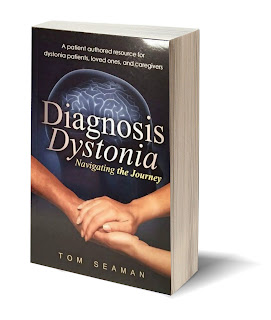
Tom Seaman is a Certified Professional Life Coach in the area of health and wellness, and author of the book, Diagnosis Dystonia: Navigating the Journey, a comprehensive resource for anyone suffering with any life challenge. He is also a motivational speaker, chronic pain and dystonia awareness advocate, health blogger, and volunteers for the Dystonia Medical Research Foundation (DMRF) as a support group leader, for WEGO Health as a patient expert panelist, and is a member and writer for Chronic Illness Bloggers Network. To learn more about Tom’s coaching practice and get a copy of his book, visit www.tomseamancoaching.com. Follow him on Twitter @Dystoniabook1 and Instagram

http://www.diagnosisdystonia.com/

Sunday, June 25, 2017

Tips to save your neck and back working on the computer

The way we do things throughout the day can sometimes have the greatest impact on our symptoms. Our body learns by repetition, so our daily habits are critical. I find them to be so important that I devoted an entire chapter to them in my dystonia book, sharing different ideas, tips, and tricks for doing different everyday activities with greater ease. Recently, I have been hearing from lots of people who are having difficulty working at their computer, so I want to focus on this particular topic. What I have to share is my opinion and not universal, but hopefully you find some ideas helpful.


For a bit of history, when my symptoms were more severe, I had to push my head straight to see the computer screen and was only able to type with one hand, like many of you. I pushed so hard, I had a red welt on the side of my chin. For those of you that need to hold your head for support, by all means do so. Putting a pillow or a book under the arm you use to hold your head might make it easier so you don’t slouch or lean to one side. This is how I started. Over time, I only had to lightly touch my chin using an antagonistic gesture (sensory trick) to keep my neck muscles from pulling. I then got to where I didn’t need to hold my head or cup my chin in my hand.

Aside from the obvious pain and fatigue that comes with dystonia, one of the main culprits of neck and back pain when we work on the computer is poor posture and improper use of armrests, or not using them at all. Resting our arms at certain angles or holding them up to type puts stress on the neck, shoulders, and back. Even people without dystonia develop problems in these areas when they don't use armrests or when they use them improperly, but it is especially important for us.

Many of us have laptops, smart phones, tablets, iPads, etc., making it so we can sit, stand, or lay down wherever we want to do our work. However, we tend to get lazy and find the most comfortable position, which is usually one that promotes poor posture. Some people will put their gadget on a desk or table where they have to lift their arms up and/or out to reach the keys to type. Some put them on a coffee table or bed and then lean forward to type.

All of this puts WAY too much strain on the body if the arms, shoulders, and neck are not evenly supported. Even sitting with computers on our laps can promote poor posture, typically one that is slumped or rounded. It also happens when we type on our phones. This posture shortens/tightens our muscles, potentially increasing symptoms.

Below is an image showing one of the ways to not sit at the computer. At first glance it looks like he is in a good position, and for the most part he is, but notice the amount of space between his arm and armrest, forcing him to engage much more of his upper body than necessary.


Although he is sitting in good posture and not reaching for the keyboard, holding his arms in the air to type strains his neck, shoulders, and back. Also notice the upward angle of his arms to the keyboard, the opposite they should be for a relaxed working position.

This man has dystonia and his primary area of pain, muscle spasms, and tightness is his neck, shoulders, and base of the skull, and it is at its worst when he works. When he modified his work station that allowed him to rest his arms at a stress free angle, it reduced his symptoms.

I use a laptop and because I can’t find a comfortable position to sit and work without reaching for the keys and straining my neck and shoulders, I bought a wireless keyboard and mouse. I also bought a desk that has a slide out keyboard tray. I put the wireless keyboard and mouse on the slide out tray and the laptop on the desk. I have a desk chair where the armrests slide right up to the keyboard tray (see below).

My arms are at a level that when I am typing my hands sit comfortably on the keys. There is a slight downward angle from my elbows to my hands to the keyboard, which keeps my shoulders relaxed. My screen is a little below eye level so I don’t have to strain to hold up my head or lean it forward or back. My chin is slightly pulled back and tucked, keeping my head and neck in a neutral position. I also use an Obusforme back support to help with posture.

Below is a picture of my work station. I certainly don’t have the best posture in the world and my core is not as engaged as well as it could be, but notice how my elbows sit comfortably on the armrests and my arms angle downward toward the keyboard, taking stress off my neck and shoulders. This position allows me to work longer hours.


I will also lay on the floor on my back with my laptop propped up against my knees, especially when I have a lot of writing to do. This might be the best option for those who find sitting to be difficult, and there are many laptop stands you can get that are designed for working while laying down. The one I use is called Laptop Laidback which I highly recommend. "Little" things like this can make a world of difference in our symptoms. For more tips and tricks for daily activities, please see my dystonia book.

Tom Seaman is a Certified Professional Life Coach in the area of health and wellness, and author of the book, Diagnosis Dystonia: Navigating the Journey, a comprehensive resource for anyone suffering with any life challenge. He is also a motivational speaker, chronic pain and dystonia awareness advocate, health blogger, and volunteers for the Dystonia Medical Research Foundation (DMRF) as a support group leader, for WEGO Health as a patient expert panelist, and is a member and writer for Chronic Illness Bloggers Network. To learn more about Tom’s coaching practice and get a copy of his book, visit www.tomseamancoaching.com. Follow him on Twitter @Dystoniabook1 and Instagram

http://www.diagnosisdystonia.com/

Monday, June 19, 2017

Attitude determines altitude

People often tell me how positive I am, and that is true most of the time. Having lived over 15 years with a painful, life changing neurological disorder called dystonia, there is no way on earth I could do it if I didn't have a positive outlook on not only this aspect of my life, but on every other aspect of my life. Before I give the wrong impression, I still struggle with difficult symptoms, so it is not as though I am cured or have all the answers. I continue to be a work in progress, but for those who know me or have read my book, you know that I have come a long way from some very dark places, and you can too.

For those of you who are deeply suffering, talk of a positive attitude may anger you. I understand. There was a time when it would infuriate me also. What I have learned over time though, is that this is the only way to live well, but we can only embrace this mindset when we are ready. Take your time. Allow the grief process to play out. This is hugely important.


I don't say "be positive" for the sake of saying it and I wouldn't look for life's silver linings unless I truly believed it helped. I know what suffering is like and would never blow smoke up your backside or put a fluffy spin on things. Some people feign happiness and a positive outlook, while others live it. Both work, but if you actually believe it and live it, it will have a greater impact. A genuinely positive attitude helps us cope more easily with the daily affairs of life. It brings optimism into our lives, making it easier to avoid worries and negative thinking. It also produces more of the "feel good" hormones in the brain. Check out The Power of Positive Thinking by Norman Vincent Peale.

There is a popular saying, "Attitude determines altitude", and this is the absolute truth in my opinion. I lived in a very pain filled, depressed and anxiety ridden world for a long time, but I chose to not let myself be that person anymore. I realized that there was no way for me to live and battle successfully if I wallowed in misery. Even though I try to find the silver lining in most things, I still struggle and it can sometimes get to where my head wants to explode. This is when I know I have to dig even deeper to keep myself from losing my marbles and going into that dark hole I once lived for way too long.

When I keep my eyes focused on the positive, or put a positive spin on things, I am better off. However, it's okay to sometimes talk about what is wrong and vent about it. I do. Sometimes focusing on what is wrong with us is the best thing to do because we need to express our emotions. Acknowledgement of our pain is also the first step to healing. However, we can't let ourselves only live in that depressed, anger filled world with no talk, or action steps, about how to get out of it. It just won't work.


Years ago when Zig Ziglar declared, “It is your attitude, more than your aptitude, that will determine your altitude," a lot of people saw it as a catchy phrase from a motivational speaker. But he was right. Please take these words to heart and even in the depths of despair, never give up hope. If I can turn my life around from pure misery and despair, and to this day still battle with intense symptoms at times, you can too. We all can.

If you need help, reach out and I or someone else will lend a hand. We can often feel very alone, but I promise if you extend your hand, there will be someone there to grab it and help you get through the day, and that is all that matters. Forget about yesterday. Forget about tomorrow. Just get through this moment right now and tomorrow will take care of itself.


Tom Seaman is a Certified Professional Life Coach in the area of health and wellness, and author of the book, Diagnosis Dystonia: Navigating the Journey, a comprehensive resource for anyone suffering with any life challenge. He is also a motivational speaker, chronic pain and dystonia awareness advocate, health blogger, and volunteers for the Dystonia Medical Research Foundation (DMRF) as a support group leader, for WEGO Health as a patient expert panelist, and is a member and writer for Chronic Illness Bloggers Network. To learn more about Tom’s coaching practice and get a copy of his book, visit www.tomseamancoaching.com. Follow him on Twitter @Dystoniabook1 and Instagram
http://www.diagnosisdystonia.com/

Thursday, May 25, 2017

Strategies for anxiety and panic attacks

Have you ever had a panic attack? If so, you know how terrifying they can be! I have had plenty and know exactly what they are like...torture! There is good news though. There are many ways to reduce and eliminate them. First off though, what exactly are panic attacks?

Panic attacks are the sudden onset of intense anxiety characterized by feelings of great fear and apprehension. They are often accompanied by things like rapid heart beat, shortness of breath, dizziness, feeling faint, sweating, trembling, and impending doom.

Because of their intensity, people who experience them tend to avoid public places and being around other people, typically groups of people. They also have anticipatory anxiety even in the most comfortable settings (such as their home), and worry about the consequences of a panic attack. Panic attacks won’t kill is, but they can feel like we are having a heart attack or stroke so people do all they can to avoid anything that might trigger one, which can leave one feeling completely imprisoned and very much misunderstood.


I have worked very hard to overcome my anxiety and subsequent panic attacks, and I have been doing well, but they were once very intense! Mine would come out of nowhere. I would get dizzy and weak, have a pounding heart like it was going to explode, claustrophobia, shallow breathing, full body trembling, and I would lose all sense of where I was. My mind would go blank and I couldn’t think clearly. I feared passing out. I was also self-conscious about how I looked, thinking everyone could see what I was feeling inside. For those who experience anxiety and panic, you know just what I mean. So, what do we do about it?

For me it has been a variety of things, the first of which was understanding that anxiety is actually a normal human emotion that everyone experiences at times. Like pain and the fight/flight stress response, for example, anxiety protects us from danger. Understanding and embracing that some level of anxiety is normal has been very helpful in accepting the uncomfortable feelings.

I then began to confront my fears. I drove as much as I could. I went shopping, frequented crowded places, and talked to as many people I could. Whatever triggered any form of fear, apprehension, and worry, I walked towards it. At first it made me worse, but instead of running, I sat with the feelings and talked myself down.

The more times I repeated the things that caused high anxiety and realized that I was safe, the less anxious I became and the panic attacks disappeared! I also took better care of my health by eating and sleeping well, listened to guided mediation/relaxation programs, and exercised. I didn't improve overnight. It took many months to years of dedication. One of the programs that helped me a lot is called Pass Through Panic by Dr. Claire Weekes (CD program). She also has a great book called Hope and Help for your Nerves.

          http://amzn.to/2rBeL24

At times I still feel some apprehension, fear, and worry. When it happens, I use the AWARE technique described below. It comes from the book, Anxiety Disorders and Phobias: A Cognitive Perspective, by Aaron Beck and Gary Emery.

A: Accept the anxiety. Welcome it. Don’t fight it. Replace your rejection, anger, and hatred of it with acceptance. By resisting, you are prolonging the unpleasantness of it. Instead, flow with it. Don’t make it responsible for how you think, feel, and act.

W: Watch and Wait. Look at your anxiety without judgment. It’s neither good nor bad. Become detached from it. Remind yourself that you are not your anxiety. The more you can separate yourself from the experience, the more you can view it as a third party observer.

Even though there is a powerful urge to run away to try and escape anxious situations, postpone that decision for a little bit. Stay in the situation. Don’t tell yourself you can’t leave. Keep that option open so you don’t feel trapped, but remember that you don’t need to run away to get relief. Let relief come to you.

A: Act with the anxiety. Act as if you aren’t anxious. Function with it. Slow down if you have to, but keep going. Breathe normally. If you run from the situation your anxiety will go down, but your fear will go up. If you stay, both your anxiety and your fear will eventually go down.

R: Repeat the steps. Continue to accept your anxiety, watch it, and act with it until it goes down to a comfortable level.

E: Expect the best. What we fear rarely happens. Recognize that a certain amount of anxiety is a normal part of life. Understanding this puts you in a good position to accept it if it comes again. You are familiar with it and know what to do with it.

After years of suffering, with more confidence I began doing things I avoided like the plague. It opened my world and made life interesting and exciting again. Instead of worrying about all the bad things that might happen before I did an activity, I started to look forward to them. A huge burden was lifted and I was living again. There are many different words people use for the FEAR acronym such as, Face Everything And Rise, False Expectations Appearing Real, Forget Everything And Run, among others. My new favorite one is, Forget Everything And Relax.


Edited excerpt from the book, Diagnosis Dystonia: Navigating the Journey


Tom Seaman is a Certified Professional Life Coach in the area of health and wellness, and author of the book, Diagnosis Dystonia: Navigating the Journey, a comprehensive resource for anyone suffering with any life challenge. He is also a motivational speaker, chronic pain and dystonia awareness advocate, health blogger, and volunteers for the Dystonia Medical Research Foundation (DMRF) as a support group leader, for WEGO Health as a patient expert panelist, and is a member and writer for Chronic Illness Bloggers Network. To learn more about Tom’s coaching practice and get a copy of his book, visit www.tomseamancoaching.com. Follow him on Twitter @Dystoniabook1 and Instagram


Friday, May 12, 2017

Health benefits of gravity/inversion table

There was a recent discussion about a gravity/inversion table in one of my support groups, so I thought I would share some information about how this device works and my experience using it.

The theory behind using a gravity/inversion table is that by inverting your body, you are able to unload the bones, joints, and discs in the back and neck. This is thought to create a traction force through the spine. Another name for inversion therapy is gravitational traction. 

Proponents of inversion therapy claim that it helps relieve back, shoulder, neck, and joint pain, improves circulation, promotes lymphatic drainage, relieves the discomfort of varicose veins, eases stress on the heart, improves posture, revitalizes and tones facial tissue, and enriches the brain and eyes with oxygen rich blood.


Over the course of the day, gravity compresses the spine and weight-bearing joints, which can cause pain, poor posture, and a host of other problems. Inversion allows your joints and spine to elongate, creating space between your ligaments and discs. This helps relieve some of the pressure accrued over the course of your daily activity (or inactivity). The image below illustrates the extent to which different postures can strain the body and how inversion therapy for just a few minutes a day might make a big difference in how we feel. 


The inversion table that I use is called Teeter Hang-ups. I have an older model (purchased around 2008) and it is very solid. Newer versions are just as solid, if not more so, and have some updated modifications/improvements. There are many places to purchase one, but I suggest starting at Amazon by clicking here. There are several options, so do some shopping around to find the best brand and price for you.

The reason I began doing inversion therapy was because I had severe neck spasms in 2008 whenever I would lay down. This is what my neck always did since 2001 when I developed dystonia, no matter my body position, but over the years I did a lot of things to help better manage my symptoms to where the involuntary movements decreased and my posture improved when sitting and standing. Laying down is when the severe spasms still reared their ugly head. Below is an image of how my neck was laying down.


After about 3 weeks of using the inversion table roughly 3-5 minutes twice a day, I was able to lie down on my back without any twisting, pulling, or spasms. I was amazed at how little it took to relieve this problem! My posture also improved and I had less pain. I can't promise similar results for you, but this was my experience. While some people invert a full 90 degrees, 45-60 degrees is sufficient for me. Below is a silly selfie of me hanging upside down. I clearly find inversion therapy to be a lot of fun!


Risks using inversion/gravity table
If you are pregnant, have heart disease, acid reflux, glaucoma, high blood pressure, or cardiovascular disease, check with your doctor before attempting inversion therapy. This is recommended regardless of your health condition. In addition, the first time anyone tries inversion therapy, they should have someone standing by in case assistance is required to get out of the apparatus, or if health problems are experienced. It is a sensation that can take some getting used to.

As with any treatment, inversion therapy is not for everyone. If you choose to do it, please slowly build up how often and for how long you use it. I once made the mistake of doing too much too soon and developed severe pain in my neck and upper back. It subsided, but I was unable to turn my head in either direction for a few days. Also, check with your doctor to determine if it is right for you, as it may not be appropriate for your situation. Best of luck. I hope it helps you like it has me!

Tom Seaman is a Certified Professional Life Coach in the area of health and wellness, and author of the book, Diagnosis Dystonia: Navigating the Journey, a comprehensive resource for anyone suffering with any life challenge. He is also a motivational speaker, chronic pain and dystonia awareness advocate, health blogger, and volunteers for the Dystonia Medical Research Foundation (DMRF) as a support group leader, for WEGO Health as a patient expert panelist, and is a member and writer for Chronic Illness Bloggers Network. To learn more about Tom’s coaching practice and get a copy of his book, visit www.tomseamancoaching.com. Follow him on Twitter @Dystoniabook1 and Instagram
http://www.diagnosisdystonia.com/

Monday, May 1, 2017

My 4 favorite self-help tools for pain

These products are for education purposes only and contain affiliate links. The reader accepts full responsibility for the use of these products. Thank you to Abbe Brown at the ST Recovery Clinic for first introducing me to these products www.stclinic.com.

Ever since I developed dystonia in 2001, I have tried what seems like every self-help tool for pain and muscle spasms known to man. Some make my symptoms worse, some don't help at all, some only help for a short time, and then there are those that have always helped in a significant way. In this blog, I am going to share my favorite things that have been consistently helpful. This is not to say you will have the same benefit, so please find what helps you best. It might take some trial and error. You might recall another article I wrote that shared a long list of self-help tools. Click here to check it out. This particular blog focuses on the 4 things that help me most that I use every day.

My favorite tool by far is the shepherd's crook. Similar products are called Thera Cane and Back Buddy. The shepherd’s crook is a long, curved, metal, rubber, or heavy plastic hook with rubber on both ends designed for working on hard to reach trigger points. The metal shepherd’s crook can be purchased from Bonnie Prudden Myotherapy. It is very sturdy, which I love. The Thera Cane and Back Buddy can be found at eBay and Amazon and have a little more bend/give, which is also desireable to me. The Thera Cane I like comes in two pieces (there are some that are in one piece like in the photo below) which I find super convenient for travelling. The shepherd's crook/Thera Cane is my favorite tool because it helps to reduce my tight back and shoulder muscles, and effectively work on painful trigger points. It also helps with my balance. To see more about how it works, please see my video.


The first thing I ever purchased after developing dystonia is called a NeckEase. It is a hot/cold aromatherapy pack made by BodySense that sits on your shoulders and around your neck (see below). Since it doesn’t get cold enough for my taste, I prefer using ice packs for cold and the NeckEase strictly for heat. Just throw it in the microwave for a few minutes and you are set for at least an hour. I then began using their Trap Pack so I could heat up my entire back (see below). I like their products because they provide moist, penetrating heat with the added benefit of aromatherapy. Check out their entire product line. They make something for practically every part of the body.

http://amzn.to/2pLzIH6


http://amzn.to/2pjZssJ


I use them before I do my stretching, get a massage, when I am extra tight and/or sore, and when I have spasms due to cold weather. I am often tight when I first get up in the morning, so I use them to loosen up. Some people make their own packs filled with rice and/or different herbs/spices. That is another option if you have sewing skills. Find whatever works best for you. For more heat options, please see my other blog on self-help tools.

Another product I have been using for years is a massage machine called Kneading Fingers. It has two rotating balls designed to duplicate the firm kneading action of a massage therapist. I use it on my neck and back, either sitting in a firm chair or standing with it between me and the wall. Check out the link above, but typically you can find the best prices for this item on Amazon and eBay. I usually use it for about 10-15 minutes in the morning and evening, but I will use it longer and more often if I am especially tight and in pain.

http://amzn.to/2oYrN5a 

My final favorite tool I want to share is called an Obusforme, which I think everyone should have. If you want to sit in good posture, the Obusforme is the way to go in my opinion. It transforms ordinary chairs into ergonomically correct seating and puts your spine into a more anatomically correct position to enhance overall posture by supporting proper spinal alignment. There are a variety of styles from which to choose and it is portable, making it easy to use it at home, office, car, sporting events, etc. Poor posture is one of the leading causes of neck and back pain, and for those of us who already have neck and back pain, posture is CRITICAL. Whether it be the Obusforme or something else you like, please be very mindful of your posture. It can make a significant difference in your symptoms.

http://amzn.to/2qsZix2

There are many other tools I use to help me manage my symptoms, but these are my top 4 favorites I use every day. I hope you also find them to be of help. For more tools to help neck pain, back pain, and muscle spasms, please click here to see my other article.

Tom Seaman is a Certified Professional Life Coach in the area of health and wellness, and author of the book, Diagnosis Dystonia: Navigating the Journey, a comprehensive resource for anyone suffering with any life challenge. He is also a motivational speaker, chronic pain and dystonia awareness advocate, health blogger, and volunteers for the Dystonia Medical Research Foundation (DMRF) as a support group leader, for WEGO Health as a patient expert panelist, and is a member and writer for Chronic Illness Bloggers Network. To learn more about Tom’s coaching practice and get a copy of his book, visit www.tomseamancoaching.com. Follow him on Twitter @Dystoniabook1 and Instagram
http://www.diagnosisdystonia.com/