Thursday, August 31, 2017

The value of a support group

I know many people who would love to go to a local support group, but there either isn't one in your area or you are not well enough to attend. This is the beauty of online support groups. However, if you are well enough to get out and go to a support group, please consider one. The human interaction can do wonders! Join one even if it is not for the health condition you live with. Before writing off this idea, please read about my experience going to a support group for a condition I do not have and how it has been of benefit.

Over a year ago, I was having lunch with a friend who has dystonia and someone we had both just met who has essential tremor (ET), a sister movement disorder. That day we learned about a local essential tremor group that meets monthly. Even though I don't have ET, I went to the meeting to support my friend since this was his maiden voyage and he was nervous.

Since I have dystonia without a tremor unless I force my head the way it does not want to turn, I felt like a fish out of water when I first walked into the room. I wasn’t sure I would be welcomed since I had a different condition, even though dystonia and essential tremor are relatives in the movement disorder family.

My concerns went out the window when I was welcomed with open arms. Everyone was so friendly and curious to learn more about me, my condition, and how I manage my daily challenges. What we all discovered is that even though we have a different condition, we share so many similarities in our personal lives, primarily those that affect us psychologically, emotionally, and socially. Below is a picture of some of the group regulars.


Some of the members have very pronounced symptoms, while others are only noticeable at certain times. Regardless, everyone lives with one or more of the following: anxiety, fear, social phobia, shame, guilt, anger, frustration about poor medical care, and of course frustration with daily living by not being able to do tasks that were once so simple. They also have incredible empathy, compassion, and kindness… the qualities I admire most!

We meet once a month and the number of attendees run from about 3 to 15 people. It is such a nice time for us to share what we experience on a daily basis, information about medical advancements, personal stories, and sometimes nothing even related to our health issues; just fun conversations in a safe place. Everyone has a different protocol of treatments, all with varying results. Everyone is eager to learn and excited to be among those who understand. These meetings allow us to let go, where all of our “problems” no longer exist.

Communicating online is of course wonderful, but to hear a voice, see an expression, give and receive a real hug, among many other things, is very healing. Please look into various support groups in your area and if you are well enough to attend, please take advantage and get to know the many wonderful people in your area who are just like you.

Please also consider one of the many support group meetings that the Dystonia Medical Research Foundation holds all over the country. Click on this link for upcoming events and meetings. If you are in the Nashville, TN area on September 27th or would like to visit that fun city, I will be speaking at a dystonia meeting along with Dr. David Charles from Vanderbilt University. The details are below. This is a free meeting and anyone can attend. Registration is online, but walk-ins are also welcome. I would love to meet many of you in person so I hope you are able to attend!

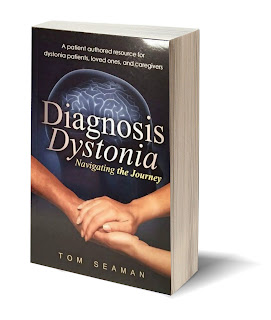
Remember that September is Dystonia Awareness Month! If you would like to learn what you can do to help, please contact the Dystonia Medical Research Foundation by phone at 800-377-3978 or by email at dystonia@dystonia-foundation.org. Also, in honor of Dystonia Awareness Month, I am offering a 20% discount off my book, Diagnosis Dystonia: Navigating the Journey. Please use the coupon code AWARE at checkout. Pick up a copy for yourself, or get a few copies for your loved ones and doctors. Thank you for your support in helping make dystonia a household name!


Tom Seaman is a Certified Professional Life Coach in the area of health and wellness, and author of the book, Diagnosis Dystonia: Navigating the Journey, a comprehensive resource for anyone suffering with any life challenge. He is also a motivational speaker, chronic pain and dystonia awareness advocate, health blogger, and volunteers for the Dystonia Medical Research Foundation (DMRF) as a support group leader, for WEGO Health as a patient expert panelist, and is a member and writer for Chronic Illness Bloggers Network. To learn more about Tom’s coaching practice and get a copy of his book, visit www.tomseamancoaching.com. Follow him on Twitter @Dystoniabook1 and Instagram

http://www.diagnosisdystonia.com/


Monday, August 14, 2017

Water soluble CBD review

I have been given this product as part of a product review through the Chronic Illness Bloggers network. Although the product was a gift, all opinions in this review remain my own and I was in no way influenced or paid by the company.

As many of you know, I live with chronic pain from a neurological movement disorder called dystonia. It is a condition where muscles in the body (in my case, the neck, shoulders, and back) involuntarily contract, causing awkward movements and postures. For most of us with dystonia, pain is the most common symptom, so I am always on the lookout for anything that can give me and others relief. When it comes to things I ingest, my preference is to go the natural route before medical, but I use a combination of both. In recent months, CBD products have been of interest to me.

CBD stands for cannabidiol, the non-addictive compound found in the cannabis (marijuana) plant, often known as hemp. The other well-known compound in cannabis is THC or Tetrahydrocannabinol, which is the principal psychoactive, potentially addictive element. Unlike THC, CBD does not cause a “high.” Both compounds have been shown to relieve many health problems.

As a member of Chronic Illness Bloggers, a network of bloggers focused on chronic illness, I was asked to review BioCBD+™ Total Body Care, made by BioCBD+™, and share my experience. BioCBD+™ Total Body Care is an all natural, water soluble source of CBD, plus Ayurvedic herbs. It is vegan, pesticide free, gluten-free, non-GMO, and contains no soy, nuts, added sugar, or artificial coloring or flavoring. BioCBD+™ Total Body Care is also cGMP certified (the highest certification possible in the nutrition supplement industry), which is an added bonus for me as a consumer. On their website, they provide a certificate of analysis for all of their products so you can see their exact ingredients.


Unlike most other CBD formulations on the market (oil drops, sprays, and topical lotions), BioCBD+™Total Body Care is a capsule just like a typical supplement. The company claims that their water soluble CBD makes the cannabinoids, terpenes, magnesium, and turmeric (curcumin) 5 times more bioavailable (more easily absorbed) than their oil-based competition. According to their website, tests show that 10 mg of BioCBD+™ Total Body Care is the equivalent of taking 50 mg or more of oil-based CBD.

The suggested dose is 1-3 capsules a day, up to 6 capsules. Each capsule has 10 mg of organic European grown hemp CBD, plus Ayurvedic herbs. I began with 1 capsule once a day and increased to 3 a day over the course of a week (2 in the morning and 1 in the evening). I was not noticing any changes at one or two capsules a day. A couple days after increasing to 3 capsules a day, I felt more relaxed with a moderate reduction in pain. At times, I found myself feeling drowsy. If I did not keep active, I felt like taking a nap.

While I noticed a decrease in pain, there was no marked improvement, although I did feel better. Since I had on a few occasions succumbed to less activity because of the drowsiness, that further helped reduce my pain. I continued taking 3 capsules per day, but chose to take only 1 in the morning and 2 in the evening closer to my bedtime so I could be more productive during the day and relax before bed.

When I made this change, pain relief remained consistent, my mind remained calm, and I was less drowsy. I felt more grounded with greater clarity. It reminds me of how I feel after a good massage or acupuncture treatment where I feel a greater sense of calm wakefulness. It was subtle, but I felt less of an edge.

The biggest difference I noticed was with tendonitis in my elbow. It was not bothering me near as much after taking it. This is a big positive, because there were days it was so bad that just shaking someone’s hand would cause screaming pain.

I encourage you to check out their website to learn more about this product and the others they have. It is different from other products I have tried in terms of its formulation, so it may very well be just what you are looking for in a CBD product. The website is also packed with helpful information about CBD and how it works. The company prides itself on customer satisfaction, so if you are not completely satisfied, they offer a 30-day, 100% money back guarantee.

Tom Seaman is a Certified Professional Life Coach in the area of health and wellness, and author of the book, Diagnosis Dystonia: Navigating the Journey, a comprehensive resource for anyone suffering with any life challenge. He is also a motivational speaker, chronic pain and dystonia awareness advocate, health blogger, and volunteers for the Dystonia Medical Research Foundation (DMRF) as a support group leader, for WEGO Health as a patient expert panelist, and is a member and writer for Chronic Illness Bloggers Network. To learn more about Tom’s coaching practice and get a copy of his book, visit www.tomseamancoaching.com. Follow him on Twitter @Dystoniabook1 and Instagram


http://www.diagnosisdystonia.com/


Monday, August 7, 2017

Post Traumatic Growth

We often hear the term Post Traumatic Stress Disorder (PTSD), a mental health condition triggered by a traumatic event. PTSD is commonly used in context of military personnel returning from active duty, but it applies to anyone who has faced traumatic events such as sexual or physical assault, an acute or chronic health condition, natural disasters, the unexpected death of a loved one, or an accident.

Most people who experience a traumatic event will have reactions that may include shock, anger, nervousness, fear, and even guilt. These reactions are normal and for most people go away over time. For a person with PTSD, however, feelings of intense fear, helplessness, or horror continue and may even increase, becoming so strong that they keep the person from living a fulfilling life. Some people with health conditions like multiple sclerosis, Parkinson's disease, dystonia, chronic pain, and many others experience PTSD.

A term we hear far less about, if at all, is called Post Traumatic Growth (PTG). PTG refers to people who become stronger and create a more meaningful life in the wake of tragedy or trauma. They don’t just bounce back, which is resilience; they bounce higher than they ever did before.


PTG is characterized by people changing their views of themselves, such as an increased sense of strength; “If I lived through that, I can face anything.” They tend to show more gratitude and have greater acceptance of their vulnerabilities and limitations, and also develop a sense that new opportunities have emerged from their struggle. Relationships are enhanced; people come to value their friends and family more, feel an increased sense of compassion for others and a longing for more intimate relationships.

They can also experience an increased sense of connection to others who suffer, which is evident in the support groups many of us belong to where we find great empathy and compassion. They gain a greater appreciation for life in general, finding a fresh, positive outlook each day; they re-evaluate what really matters in life, become less materialistic, and are better able to live in the present. Another common feature is a change or deepening in spiritual beliefs.

I was never diagnosed with PTSD, but I lived through periods of intense fear, anger, desperation, and hopelessness after experiencing a dramatic shift in my life due to chronic pain from dystonia. Having worked through a lot of these emotions over the years, I have seen a significant amount of growth.

I appreciate many things I once took for granted. I realize how fragile life is and how it should be honored by treating ourselves and others with love and respect. I have a much deeper appreciation for people who struggle with life challenges. I have come to better understand the meaning of loss which has increased my ability to live in gratitude. I have also found greater meaning to my life and feel a deeper spiritual connection.

HOWEVER, I had to get past my anger and open myself up to opportunities, which took time. I needed to grieve for the life I lost. Once I did, I saw things very differently and began behaving in more positive ways. The key was not being so stubborn and peeking outside my box of comfort and seeing the life I could create for myself, all the while still living with chronic pain and dystonia.


Any life challenge can truly be a source of growth for all of us in ways we probably never imagined, and research has shown that in the face of great challenges, significant human and spiritual growth can occur. In order for it to take place, it is crucial that we are open to the possibilities that lie within our “misfortune.” We must abandon hatred and anger, for it will only worsen the pain we feel, preventing us from any kind of growth. Every experience is an opportunity to learn and reach a higher level of well being.

Tom Seaman is a Certified Professional Life Coach in the area of health and wellness, and author of the book, Diagnosis Dystonia: Navigating the Journey, a comprehensive resource for anyone suffering with any life challenge. He is also a motivational speaker, chronic pain and dystonia awareness advocate, health blogger, and volunteers for the Dystonia Medical Research Foundation (DMRF) as a support group leader, for WEGO Health as a patient expert panelist, and is a member and writer for Chronic Illness Bloggers Network. To learn more about Tom’s coaching practice and get a copy of his book, visit www.tomseamancoaching.com. Follow him on Twitter @Dystoniabook1 and Instagram


http://www.diagnosisdystonia.com/

Monday, July 31, 2017

Relax while you work

For many of us with health issues that involve pain, muscle spasms/contractions, fatigue, etc., sitting at a desk and working at the computer is very difficult. You may recall a recent blog I wrote called, Tips to save your neck and back working at the computer. I shared tips for working upright at a desk more easily, but many of us have to lie in bed, on the couch, recliner, or floor at times.

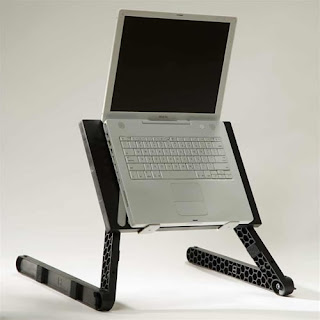
To that end, I mentioned a product called Laptop Laidback that was designed specifically for working on your laptop, tablet, iPad, Kindle, etc., while lying down. Unable to work like we used to and want to, this can make us feel very unproductive. Laptop Laidback helps change all that. Check out the pictures below.


https://www.laptop-laidback.com?wpam_id=3


https://www.laptop-laidback.com?wpam_id=3

As many of you know from reading my dystonia book, I do a lot of work writing health articles, copywriting/publishing, blogging, and life coaching. While my symptoms from dystonia have improved using a variety of different treatments, I still get worn out from pain, dizziness, and fatigue. When I have a lot of work to do and am too sore or tired to sit at the computer, I will hit the floor and continue working.

I used to prop my laptop on my bent knees, but it caused more strain and tension than I would prefer because I had to reach for the keyboard as I balanced the computer. When I began using Laptop Laidback, I was able to relax my arms and legs, allowing me to work for longer periods of time in a comfortable position.

There are similar products on the market, but I like Laptop Laidback best because it is the only one where I can keep my elbows rested on the surface of the bed, floor, recliner, etc., while typing. It was designed with this in mind and no other product to my knowledge allows you to do this. It is a critical feature because less arm reaching and lifting equals less pain!

https://www.laptop-laidback.com?wpam_id=3

I have to be honest... when I first received it, I was skeptical. It is made of lightweight material and while very easy to assemble (no tools required), it seemed flimsy. Never did I think it would support my computer with me pounding away at the keys (I then found out it is made of a glass fiber formula similar to the sturdy wheels of a wheelchair). It also took some trial and error to get it adjusted to the proper angle and height for my needs. However, once I did, WOW, what a difference!! Not only is it super solid (beautifully designed by a physics teacher), it sits at the perfect height so I can finally relax when I have to lie down to work! I experience so much less discomfort. You wouldn't think by looking at it or holding it that it would be so solid and user friendly. I encourage you to look at their website to check out its other key features.

I was so impressed that I called the designer and owner of the company. He is a great guy and very empathetic to those of us in need of a desk like this. He wanted to help so he is offering a $10 discount! Click here to go to their website and use Coupon Code RELAX when you order. I hope you like it as much as I do!

Tom Seaman is a Certified Professional Life Coach in the area of health and wellness, and author of the book, Diagnosis Dystonia: Navigating the Journey, a comprehensive resource for anyone suffering with any life challenge. He is also a motivational speaker, chronic pain and dystonia awareness advocate, health blogger, and volunteers for the Dystonia Medical Research Foundation (DMRF) as a support group leader, for WEGO Health as a patient expert panelist, and is a member and writer for Chronic Illness Bloggers Network. To learn more about Tom’s coaching practice and get a copy of his book, visit www.tomseamancoaching.com. Follow him on Twitter @Dystoniabook1 and Instagram
http://www.diagnosisdystonia.com/


Sunday, July 16, 2017

How one looks is not a measure for how one feels

Human beings are visual creatures, so we often associate how one feels based on how they look and act. Sadly, this is very short sighted. Many people live with life altering conditions such as chronic pain, dystonia, cancer, multiple sclerosis, diabetes, etc., with no visible symptoms at all to the naked eye. We also can't see anxiety, depression, dementia, PTSD, etc., which can be be crippling, so we should never base any conclusions about how someone feels on their appearance.

For many years, I lived with very visible symptoms of cervical dystonia and intense chronic pain where I could barely function, as well as morbid obesity. I also dealt with debilitating anxiety and depression. After losing 150 pounds (see before and after below) and learning to better manage my dystonia and chronic pain symptoms, I look normal so most people wrongfully think I am cured.


In actuality, I still live with pain and muscle contractions, awkward postures from muscles involuntarily pulling me off center, fatigue, etc. It is just not as visible as it used to be, but that doesn't mean I don't feel like someone is strangling me most of the time and my muscle contractions make me want to fall on the floor. Unfortunately, people can't see it so people often don't believe it.

This is the case for many people who are living with chronic health conditions. Many symptoms are completely invisible. Granted, dystonia is one that is often visible, but I know countless people with dystonia who have brutal symptoms that do not manifest physically. As a result, it is hard to diagnose and it is hard for people to believe them when they explain how they feel. People think it is all in our head, we are lazy, looking for attention, and so many other thoughtless judgments.

Sadly though, we all judge and compare. We do it with relationships, financial status, social life, possessions, and countless other things. Some people even compare their health with others. I used to compare my dystonia (and most of my life for that matter) with people all the time.

When I was experiencing the worst of my dystonia symptoms, in my mind, if someone didn’t look as bad as me then there was no way they could feel as bad as me. How wrong I was and shame on me!! Appearance means nothing. I know people with very difficult looking symptoms that have little to no pain and are very functional, others with no visible symptoms and in terrible pain, unable to do much of anything, and of course many people in between. How one looks is not a measure for how one feels!


When times were really tough for me, it was hard to reconcile hearing people say things like, “I can’t take it anymore”; “I wish I were never born”; “The pain is more than I can handle.” When I said these things it was usually just a way of describing to others how sick I felt, but there were plenty of times I really felt this way.

When I heard others use these same words while they were still working, travelling, running, hiking, playing tennis and golf, etc., going to social functions, and living what appeared to be a pretty normal life, while I was literally living on my floor because I was in too much pain to sit or stand, I was infuriated. For years, just walking to the bathroom from bed was a major undertaking. I couldn’t fathom doing all the other things.

It took me a long time to realize that I was being unfair because we only know what we know. Our reality is unique to us, so for a person who we perceive as having “mild” symptoms, it might be far worse than we think and/or to them it might be the worst thing they ever experienced.


People also have different pain thresholds, attitudes, and coping skills. Thus, their words ring true for them. They can describe themselves however they want and be involved in whatever activities they choose. We are not in their shoes so we don’t know what they are experiencing. Quite frankly, it is none of our business.

Just because someone else, whether they have a limiting health condition or not, might be able to do things you can’t or find uncomfortable does not make you any less of a person. There may be things you can do with ease where others struggle. Either way, it doesn’t matter. You have many great qualities and everyone in your life should focus on the strengths that exist and the accomplishments YOU achieve every day. Our time is better spent doing all we can to feel as well as we can, instead of comparing ourselves with others and trying to understand and figure out someone else’s life.


Tom Seaman is a Certified Professional Life Coach in the area of health and wellness, and author of the book, Diagnosis Dystonia: Navigating the Journey, a comprehensive resource for anyone suffering with any life challenge. He is also a motivational speaker, chronic pain and dystonia awareness advocate, health blogger, and volunteers for the Dystonia Medical Research Foundation (DMRF) as a support group leader, for WEGO Health as a patient expert panelist, and is a member and writer for Chronic Illness Bloggers Network. To learn more about Tom’s coaching practice and get a copy of his book, visit www.tomseamancoaching.com. Follow him on Twitter @Dystoniabook1 and Instagram

http://www.diagnosisdystonia.com/

Sunday, June 25, 2017

Tips to save your neck and back working on the computer

The way we do things throughout the day can sometimes have the greatest impact on our symptoms. Our body learns by repetition, so our daily habits are critical. I find them to be so important that I devoted an entire chapter to them in my dystonia book, sharing different ideas, tips, and tricks for doing different everyday activities with greater ease. Recently, I have been hearing from lots of people who are having difficulty working at their computer, so I want to focus on this particular topic. What I have to share is my opinion and not universal, but hopefully you find some ideas helpful.


For a bit of history, when my symptoms were more severe, I had to push my head straight to see the computer screen and was only able to type with one hand, like many of you. I pushed so hard, I had a red welt on the side of my chin. For those of you that need to hold your head for support, by all means do so. Putting a pillow or a book under the arm you use to hold your head might make it easier so you don’t slouch or lean to one side. This is how I started. Over time, I only had to lightly touch my chin using an antagonistic gesture (sensory trick) to keep my neck muscles from pulling. I then got to where I didn’t need to hold my head or cup my chin in my hand.

Aside from the obvious pain and fatigue that comes with dystonia, one of the main culprits of neck and back pain when we work on the computer is poor posture and improper use of armrests, or not using them at all. Resting our arms at certain angles or holding them up to type puts stress on the neck, shoulders, and back. Even people without dystonia develop problems in these areas when they don't use armrests or when they use them improperly, but it is especially important for us.

Many of us have laptops, smart phones, tablets, iPads, etc., making it so we can sit, stand, or lay down wherever we want to do our work. However, we tend to get lazy and find the most comfortable position, which is usually one that promotes poor posture. Some people will put their gadget on a desk or table where they have to lift their arms up and/or out to reach the keys to type. Some put them on a coffee table or bed and then lean forward to type.

All of this puts WAY too much strain on the body if the arms, shoulders, and neck are not evenly supported. Even sitting with computers on our laps can promote poor posture, typically one that is slumped or rounded. It also happens when we type on our phones. This posture shortens/tightens our muscles, potentially increasing symptoms.

Below is an image showing one of the ways to not sit at the computer. At first glance it looks like he is in a good position, and for the most part he is, but notice the amount of space between his arm and armrest, forcing him to engage much more of his upper body than necessary.


Although he is sitting in good posture and not reaching for the keyboard, holding his arms in the air to type strains his neck, shoulders, and back. Also notice the upward angle of his arms to the keyboard, the opposite they should be for a relaxed working position.

This man has dystonia and his primary area of pain, muscle spasms, and tightness is his neck, shoulders, and base of the skull, and it is at its worst when he works. When he modified his work station that allowed him to rest his arms at a stress free angle, it reduced his symptoms.

I use a laptop and because I can’t find a comfortable position to sit and work without reaching for the keys and straining my neck and shoulders, I bought a wireless keyboard and mouse. I also bought a desk that has a slide out keyboard tray. I put the wireless keyboard and mouse on the slide out tray and the laptop on the desk. I have a desk chair where the armrests slide right up to the keyboard tray (see below).

My arms are at a level that when I am typing my hands sit comfortably on the keys. There is a slight downward angle from my elbows to my hands to the keyboard, which keeps my shoulders relaxed. My screen is a little below eye level so I don’t have to strain to hold up my head or lean it forward or back. My chin is slightly pulled back and tucked, keeping my head and neck in a neutral position. I also use an Obusforme back support to help with posture.

Below is a picture of my work station. I certainly don’t have the best posture in the world and my core is not as engaged as well as it could be, but notice how my elbows sit comfortably on the armrests and my arms angle downward toward the keyboard, taking stress off my neck and shoulders. This position allows me to work longer hours.


I will also lay on the floor on my back with my laptop propped up against my knees, especially when I have a lot of writing to do. This might be the best option for those who find sitting to be difficult, and there are many laptop stands you can get that are designed for working while laying down. The one I use is called Laptop Laidback which I highly recommend. "Little" things like this can make a world of difference in our symptoms. For more tips and tricks for daily activities, please see my dystonia book.

Tom Seaman is a Certified Professional Life Coach in the area of health and wellness, and author of the book, Diagnosis Dystonia: Navigating the Journey, a comprehensive resource for anyone suffering with any life challenge. He is also a motivational speaker, chronic pain and dystonia awareness advocate, health blogger, and volunteers for the Dystonia Medical Research Foundation (DMRF) as a support group leader, for WEGO Health as a patient expert panelist, and is a member and writer for Chronic Illness Bloggers Network. To learn more about Tom’s coaching practice and get a copy of his book, visit www.tomseamancoaching.com. Follow him on Twitter @Dystoniabook1 and Instagram

http://www.diagnosisdystonia.com/

Monday, June 19, 2017

Attitude determines altitude

People often tell me how positive I am, and that is true most of the time. Having lived over 15 years with a painful, life changing neurological disorder called dystonia, there is no way on earth I could do it if I didn't have a positive outlook on not only this aspect of my life, but on every other aspect of my life. Before I give the wrong impression, I still struggle with difficult symptoms, so it is not as though I am cured or have all the answers. I continue to be a work in progress, but for those who know me or have read my book, you know that I have come a long way from some very dark places, and you can too.

For those of you who are deeply suffering, talk of a positive attitude may anger you. I understand. There was a time when it would infuriate me also. What I have learned over time though, is that this is the only way to live well, but we can only embrace this mindset when we are ready. Take your time. Allow the grief process to play out. This is hugely important.


I don't say "be positive" for the sake of saying it and I wouldn't look for life's silver linings unless I truly believed it helped. I know what suffering is like and would never blow smoke up your backside or put a fluffy spin on things. Some people feign happiness and a positive outlook, while others live it. Both work, but if you actually believe it and live it, it will have a greater impact. A genuinely positive attitude helps us cope more easily with the daily affairs of life. It brings optimism into our lives, making it easier to avoid worries and negative thinking. It also produces more of the "feel good" hormones in the brain. Check out The Power of Positive Thinking by Norman Vincent Peale.

There is a popular saying, "Attitude determines altitude", and this is the absolute truth in my opinion. I lived in a very pain filled, depressed and anxiety ridden world for a long time, but I chose to not let myself be that person anymore. I realized that there was no way for me to live and battle successfully if I wallowed in misery. Even though I try to find the silver lining in most things, I still struggle and it can sometimes get to where my head wants to explode. This is when I know I have to dig even deeper to keep myself from losing my marbles and going into that dark hole I once lived for way too long.

When I keep my eyes focused on the positive, or put a positive spin on things, I am better off. However, it's okay to sometimes talk about what is wrong and vent about it. I do. Sometimes focusing on what is wrong with us is the best thing to do because we need to express our emotions. Acknowledgement of our pain is also the first step to healing. However, we can't let ourselves only live in that depressed, anger filled world with no talk, or action steps, about how to get out of it. It just won't work.


Years ago when Zig Ziglar declared, “It is your attitude, more than your aptitude, that will determine your altitude," a lot of people saw it as a catchy phrase from a motivational speaker. But he was right. Please take these words to heart and even in the depths of despair, never give up hope. If I can turn my life around from pure misery and despair, and to this day still battle with intense symptoms at times, you can too. We all can.

If you need help, reach out and I or someone else will lend a hand. We can often feel very alone, but I promise if you extend your hand, there will be someone there to grab it and help you get through the day, and that is all that matters. Forget about yesterday. Forget about tomorrow. Just get through this moment right now and tomorrow will take care of itself.


Tom Seaman is a Certified Professional Life Coach in the area of health and wellness, and author of the book, Diagnosis Dystonia: Navigating the Journey, a comprehensive resource for anyone suffering with any life challenge. He is also a motivational speaker, chronic pain and dystonia awareness advocate, health blogger, and volunteers for the Dystonia Medical Research Foundation (DMRF) as a support group leader, for WEGO Health as a patient expert panelist, and is a member and writer for Chronic Illness Bloggers Network. To learn more about Tom’s coaching practice and get a copy of his book, visit www.tomseamancoaching.com. Follow him on Twitter @Dystoniabook1 and Instagram
http://www.diagnosisdystonia.com/