Tuesday, November 1, 2016

Our mind: As powerful as any drug

Did you know that we have chemicals in the brain as powerful as drugs for pain, depression, anxiety, and other conditions? Among them are neurotransmitters called endorphins, serotonin, oxytocin, and dopamine, which are often referred to as the "feel good" or "happy" chemicals. Let's play around with endorphins...the body's natural pain killer (our own private narcotic!). Endorphins affect us like codeine and morphine by blocking a cell's transmission of pain signals, but without the addiction. The word endorphin derives from two words - endogenous (from within) and morphine.


In addition to decreased feelings of pain, secretion of endorphins leads to feelings of euphoria, modulation of appetite, enhancement of the immune response, and fewer negative effects of stress. Endorphins are popularly associated with “runner’s high”, but no need to worry if you don’t run. There are numerous ways to increase production of these potent brain chemicals besides strenuous workouts. These include but are not limited to the following:

Massage
Acupuncture
A good movie
Prayer
Positive thinking/affirmations
Physical exercise
Music and dancing
Laughter (even fake laughter does the trick! The brain doesn’t know the difference between real or fake laughter. Even the anticipation of something funny releases endorphins)
Regular sleep/wake cycle
Shopping
Fun hobbies (arts and crafts, photography, beadwork, quilting, cooking, nature walks)
Quality time with family and friends
Sex (including cuddling, kissing, and holding hands with a romantic partner)
Good deeds (the flood of endorphins and serotonin caused by being generous has been called “helper’s high”)
Reading a good book
Meditation and controlled breathing exercises (breathe through your stomach; not your chest)
Being around animals
Sauna/hot tub
Biofeedback
Alcohol (light drinking; heavy drinking negates the effect)
Nutrition (anti-inflammatory foods)
Sunlight

Practically all of these things are at our disposal, so we should try and take advantage of them as much as we can. Not all of them will be of help (or interest) to everyone, but I wanted to share many of the options available to us. I also recognize that when in pain and feeling mentally down (I have been there!!), these things are not always easy to do or yield results the first or first few times doing them. If this is the case for you, maybe start with one thing you enjoy and do your best to make it part of your lifestyle.

Perhaps before starting there, practice the art of appreciation and gratitude. This is a great first step when we are suffering, most of which comes from expectation. Most of us have a blueprint for how life should be and when it isn't how we planned, it can cause depression. If this is the case, focus on something or someone you appreciate, do your best to sit with that feeling, and then move forward with hopefully more peace in your heart. Anything that gets us looking outward and/or releasing pent-up feelings has the potential of helping.


People often ask me the different ways I manage my chronic pain associated with dystonia, and I usually list many of these things. I can't say for sure how much they play a role, but when I did not do these things on a regular basis, pain was more severe. I was also depressed and anxiety ridden, a far cry from the person I was pre-dystonia, and a far cry from the person I am now, thanks to many of these things.

A fun fact to keep in mind is that neutral or positive sensory messages travel through the nervous system faster than painful messages. More specifically, soothing sensations travel up to seven times faster than sharp or burning pain. This means that if soothing sensations and painful sensations reach the “pain gate” to the brain at the same time, the pleasant sensations will prevail, blocking the slower, painful ones.1 In other words, to reverse the course of pain and depression, it helps to do things that consistently provide reliable pleasant body experiences that compete successfully with pain (i.e., activities that produce endorphins, oxytocin, serotonin, and dopamine).

An easy way to remember how to harness the power of the brain's natural drugs is to live by the popular saying, "Sing like no one is listening, dance like nobody's watching, love like you've never been hurt, and live like it's heaven on earth."

In other words, have fun and do your best to not care so much what others think about you. Live your life on your terms. Never give up. Be patient with yourself. Never lose hope. Trust that everything will always work out. All of it is easier said than done, but when we get the "feel good" hormones flowing, nothing and no one can ever take away our peace of mind and body.

1) Phillips, M. (2007) Reversing Chronic Pain. North Atlantic Books: Berkeley, CA

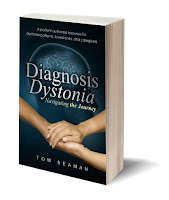
Tom Seaman is a Certified Professional Life Coach in the area of health and wellness, and author of the book, Diagnosis Dystonia: Navigating the Journey, a comprehensive resource for anyone suffering with any life challenge. He is also a motivational speaker, chronic pain and dystonia awareness advocate, health blogger, and volunteers for the Dystonia Medical Research Foundation (DMRF) as a support group leader, for WEGO Health as a patient expert panelist, and is a member and writer for Chronic Illness Bloggers Network. To learn more about Tom’s coaching practice and get a copy of his book, visit www.tomseamancoaching.com. Follow him on Twitter @Dystoniabook1 and Instagram
http://www.diagnosisdystonia.com/

Saturday, October 22, 2016

From severe chronic pain and morbid obesity to a joyful bike rider!

When you look at the picture below, you see a regular guy riding a bicycle; and that would be correct. I am pretty much just a regular guy doing a regular, everyday activity. However, this wasn’t always the case. What you don’t see in this picture is a former morbidly obese, depressed, angry guy in severe, chronic pain.


When dystonia entered my life, everything stopped, or seemed to stop, as everything I did was no longer possible for me to continue. Work couldn’t be done. My masters degree that I was pursuing at the time quickly became a lost dream, I couldn’t travel…heck, I could barely sit or stand without crying pain.

Because of my sedentary lifestyle with disabling pain, a terrible diet, and medicating myself with alcohol, I gained a lot of weight. I was well over 300 pounds, a long way from the 190 pounds I weighed when dystonia began. I was a recluse, holing myself up in my house for years, embarrassed and ashamed at what my life had become.

Five years after my diagnosis, I reached a point where I was afraid I might die from the punitive lifestyle I chose for myself; all done for the purpose of avoiding my physical and emotional pain, but my escape actually made me worse so it was a fruitless endeavor. A decision had to be made; continue this destructive lifestyle and suffer the consequences, or make a change a get busy living. I chose to live. I wanted a different life and would do anything to make it happen. Each day I took baby steps by exercising and changing my diet. Each day I added more things to lose weight and also gain greater control of my dystonia symptoms. I am proud to say that I have lost around 150 pounds and kept it off!


Unfortunately, I developed some problems in my back that made walking uncomfortable (my main form of exercise), so I took to riding a bike to get around the neighborhood. I felt like a kid again so I began to ride further. Wow it felt good! While I don’t go very far, maybe a few miles, I do enough to get my heart rate up and break a sweat. Some days I will really push it and get in a good workout, while other days I will roll around and just enjoy the scenery, something I missed out on for way too many years.

To everyone who sees me riding a bike that doesn’t know my story of pain, obesity, and on the verge of suicide, I am just another person out getting some exercise. This is true, but what they don’t know is that this is a guy who almost wasn’t even here at all. Most importantly, they don’t see the immense internal joy I now feel just to be able to sit on the bike again, let alone ride it!

So grateful to be alive, I love riding around and seeing a fox run by or a rabbit staring at me from the bushes thinking it is camouflaged and I can’t see it. I love seeing the colors of the sky change in the evening as I ride. I love feeling the wind on my face, the way the bike banks on turns, and how my heart feels beating through my chest; things I never thought I would experience again after my diagnosis…ever!!


To anyone looking at this picture it appears that I am just a guy out enjoying a bike ride…and you are absolutely correct. Even though I still have pain and muscle contractions/spasms from dystonia, for the first time in years, without worry or fear, I am finally just a guy out enjoying the ride…the ride of his life!

Tom Seaman is a Certified Professional Life Coach in the area of health and wellness, and author of the book, Diagnosis Dystonia: Navigating the Journey, a comprehensive resource for anyone suffering with any life challenge. He is also a motivational speaker, chronic pain and dystonia awareness advocate, health blogger, and volunteers for the Dystonia Medical Research Foundation (DMRF) as a support group leader, for WEGO Health as a patient expert panelist, and is a member and writer for Chronic Illness Bloggers Network. To learn more about Tom’s coaching practice and get a copy of his book, visit www.tomseamancoaching.com. Follow him on Twitter @Dystoniabook1 and Instagram
http://www.diagnosisdystonia.com/


Sunday, October 16, 2016

The power of positive thoughts on our health

Most people have probably heard the saying, “change your thoughts, change your life.” There is great truth to this because how we think can significantly impact our mental and physical health. Consider the power of placebo. It is not the placebo that heals a person, but a person’s belief in it that does the healing. Clearly, the mind is extremely powerful which is great news for us because when we think healthy thoughts, the body finds it easier to be healthy.

One way we can utilize the power of the mind is with positive affirmations. I find affirmations to be very helpful as I live with the ups and downs of a very challenging neurological disorder called dystonia.

Affirmations are positive, specific statements that can condition the subconscious mind to develop a more positive perception of ourselves. Affirmations help improve our health and the perception of our health, change harmful thoughts and behaviors, accomplish goals, and have a brighter outlook on all situations in life. They can also help undo damage caused by negative things we repeatedly tell ourselves (or what others repeatedly tell us) that contribute to a negative self-perception.

Positive affirmations bring to life our capabilities, strengths, talents, and skills. When we say “I can’t”, the energy of those words repel against us. When we say “I can”, we are better able to achieve what we desire. Look at affirmations the same way as repetitive exercises that improve our physical health. Positive mental repetitions reprogram the brain so we begin to think and act in a healthier way.

Additionally, when we think positively, the pituitary gland disperses endorphins which are effective in releasing energy that eases healing and relieves pain. When we have negative thoughts, noradrenaline (a stress hormone sometimes referred to as norepinephrine) is dispersed.


Write down areas in your life or behaviors you want to improve. For each, come up with a positive, present-tense statement you can repeat to yourself several times a day. Below are some health related affirmations. Even if some of them are not true at the moment, but how you want things to be, say them anyway. We can manifest anything with the right mindset that is consistent. Keep in mind that anger, bitterness, and resentment are also affirmations. They are the ones to avoid if we want to be healthy.

Affirmations
  • My ability to conquer (insert health condition) and other challenges is limitless.
  • My mind is clear and calm.
  • My body is balanced and strong.
  • I make healthy choices. I have respect for myself.
  • My only work is to relax and breathe.
  • I am grateful to be alive today. It is my joy to live another day.
  • I am willing to ask for help when I need it.
  • I am pain free.
  • Everything that is happening now is for my ultimate good.
  • I am at peace with what has happened, is happening, and will happen.
  • I sleep in peace and wake in joy.
  • Every day in every way I am getting healthier and feeling better.
  • I love and care for my body and it cares for me.
  • I am in control of my life and health.
  • I value my time and energy.
  • I allow myself to play and enjoy life.
  • I am full of energy and vitality.
  • Every day is a new day full of hope, happiness, and health.

Affirmations should use positive language and clearly express what you desire. It is important to use affirmations with “I”, “I am”, and “I will” statements, affirming that you will use your abilities to achieve your goal. Close your eyes, shut out the rest of the world, and repeat the words, thinking what they mean to you. Feel the emotions that the affirmations evoke.

An affirmation I often say is, “My mind is clear and calm. My body is balanced and strong. My heart is loving and pure.” These are all areas where I feel the need to focus my attention to achieve balance in my life. The more I repeat this, the more it becomes part of my everyday life, positively impacting everything I do.

Developing a positive mindset is one of the most powerful life strategies at our disposal. With positive affirmations and visualization, it is possible to transform our life and our health, and renew joy and passion. For more health affirmations, please see the work done by Louise Hay.


http://www.diagnosisdystonia.com/

Tom Seaman is a Certified Professional Life Coach in the area of health and wellness, and author of the book, Diagnosis Dystonia: Navigating the Journey, a comprehensive resource for anyone suffering with any life challenge. He is also a motivational speaker, chronic pain and dystonia awareness advocate, health blogger, and volunteers for the Dystonia Medical Research Foundation (DMRF) as a support group leader, for WEGO Health as a patient expert panelist, and is a member and writer for Chronic Illness Bloggers Network. To learn more about Tom’s coaching practice and get a copy of his book, visit www.tomseamancoaching.com. Follow him on Twitter @Dystoniabook1 and Instagram

Monday, October 3, 2016

Never give up!

I recently found this obese picture of me from 10 years ago with my nephew. I then recreated it last week to see a comparison. My nephew grew and I shrunk :)  I am sharing this because my greatest wish in all I do is to provide others with hope. Hope is the cornerstone of my book, along with strategies for living well so that dystonia does not dominate your life.


When chronic pain from dystonia began in 2001, it was so debilitating I basically lived on my floor. I was very sedentary and had a very unhealthy lifestyle. I went from an athletic 190 pounds to well over 300 pounds. Depressed, anxiety ridden, and embarrassed, I retreated from the world. The physical and mental pain were killing me. Very sick and fearing the worst I said, "no more! I want to live!" I made a plan and took baby steps, changing one or two things a day in pursuit of health. I began to learn ways to manage my pain and I lost nearly 150 pounds!!

I still have many challenges with dystonia and pain, but it is much better than it once was. It takes a lot of work every day, but I know where it can lead if I don't remain diligent. Please believe that whatever challenge you want to overcome or learn to better live with, be it dystonia, weight issues, or something else, anything is possible. Please never give up!!

Tom Seaman is a Certified Professional Life Coach in the area of health and wellness, and author of the book, Diagnosis Dystonia: Navigating the Journey, a comprehensive resource for anyone suffering with any life challenge. He is also a motivational speaker, chronic pain and dystonia awareness advocate, health blogger, and volunteers for the Dystonia Medical Research Foundation (DMRF) as a support group leader, for WEGO Health as a patient expert panelist, and is a member and writer for Chronic Illness Bloggers Network. To learn more about Tom’s coaching practice and get a copy of his book, visit www.tomseamancoaching.com. Follow him on Twitter @Dystoniabook1 and Instagram
http://www.diagnosisdystonia.com/

Thursday, September 29, 2016

Patient Assistance Programs for Botox, Xeomin, Dysport, and Myobloc

This is just a brief entry to share with you the various programs in place to help people pay for their botulinum neurotoxin injections. These programs help patients with or without medical insurance. Below are links to the different programs for each of the botulinum neurotoxins (Botox, Xeomin, Dysport, Myobloc). Each program is different, but all of them can amount to significant savings if you are eligible.


Xeomin (Merz Pharmaceutical): http://www.xeomin.com/consumers/patient-resources/patient-savings-program/

Dysport (Ipsen): http://www.ipsencares.com/

Myobloc (Solstice Neurosciences): https://www.pparx.org/prescription_assistance_programs/myobloc_patient_assistance_program

Friday, September 16, 2016

You can't fix dystonia with a cast

This title is a relatively poor attempt at a creative way to illustrate how so many people confuse dystonia with temporary ailments like the flu, other short term health issues, injuries, etc. Let's use a broken ankle as an example. In most cases, if you sprain, fracture, or break your ankle, you are put in a cast for 6-8 weeks. Once the cast is taken off, most patients are back to normal within about two weeks after the ankle strengthens from atrophy. I know this firsthand because I broke both my ankles on four occasions throughout my life, not to mention a host of other injuries.

Of course, there are exceptions where people need additional treatments, therapy, and perhaps surgery. However, in most cases, you break your ankle, a cast is put on, and shortly after it is taken off you are back to normal. This is not even remotely close to what life is like with dystonia and other chronic health conditions, but far too many people incorrectly believe they are the same.

When my dystonia began in 2001 (I have cervical dystonia so it affects my neck), I tried many different treatments to see what would help most. After each treatment/therapy, the people in my life thought it would fix or eliminate my dystonia, just like a cast for a broken bone, aspirin for a headache, or a band aid for a cut. They expected my muscles to stop contracting, my pain to disappear, and my neck to be straight rather than the muscles turning it towards my right shoulder. Sure, there were times when I had temporary relief like this, but it never lasted. My oh my were people shocked! Some even blamed me for the treatment not working. Yes, I know... absurd. Some even left my life because they couldn’t grasp the concept of a health condition that didn’t heal. Sad but true.


Here is the 411 about dystonia that needs to be understood. There is no treatment for dystonia that results in permanent healing. Some will argue there is, and there are some who have been healed with some treatments, but it is a rare and unique situation. For most people, healing means a reduction in symptoms or just better symptom management, but these people are still living with symptoms; for some it can be life altering. Unlike a broken ankle that heals, unless there is remission, dystonia will be there in one way or another. You can't put a cast on my neck or give me a massage and expect it to disappear. A massage feels great, as do other therapies I utilize, but it doesn’t fix anything long term. We all wish it were that simple.

What also needs to be understood is that dystonia manifests differently in all of us and a treatment that helps one may not help another. Further, the list of treatments is endless ranging from things like physical therapy to brain surgery, and many people are doing more than one thing to help manage their symptoms. Let me repeat that... MANAGE their symptoms. Treatments do not heal dystonia like an ankle immobilized in a cast heals a break.

There is no cookie cutter treatment so every case should be taken individually, something not done nearly enough by doctors who often use just one modality for every patient. Dystonia has to be managed daily with a variety of treatments and lifestyle changes, no different than people with diabetes, celiac disease, Parkinson's disease, essential tremor, chronic migraines, fibromyalgia, arthritis, etc., have to monitor their health condition on a daily basis to be able to function, and even "functioning" is a relative term when it comes to dystonia.

Please understand that there is no black and white with dystonia. Most people live in that massive grey area in the middle trying to get through the day with whatever treatments and palliative care are at their disposal. Unlike a broken ankle, we can't put a cast on our affected body part for 6-8 weeks, take it off, and move on with our lives. The two are not even in the same ballpark and we who live with dystonia would appreciate it if people understood that there is no cast or bandage or pill for dystonia. We respectfully request that people accept the fact that the treatments we receive are temporary in most cases and do not make dystonia disappear. One day we will have treatments like that, but for now, everything we do is for the purpose of minimizing our symptoms so we can function in our daily lives.

Tom Seaman is a Certified Professional Life Coach in the area of health and wellness, and author of the book, Diagnosis Dystonia: Navigating the Journey, a comprehensive resource for anyone suffering with any life challenge. He is also a motivational speaker, chronic pain and dystonia awareness advocate, health blogger, and volunteers for the Dystonia Medical Research Foundation (DMRF) as a support group leader, for WEGO Health as a patient expert panelist, and is a member and writer for Chronic Illness Bloggers Network. To learn more about Tom’s coaching practice and get a copy of his book, visit www.tomseamancoaching.com. Follow him on Twitter @Dystoniabook1 and Instagram
http://www.diagnosisdystonia.com/


Monday, September 12, 2016

2016 WEGO Health Activist Awards

I am excited to announce I have been nominated for the 2016 WEGO Health Activist Awards! I have actually been nominated for 3 awards! Health Activist Hero, Best Kept Secret, and Rookie of the Year.

am so excited and grateful to all you who have nominated me, and thank you very much for your continued support! We have just entered the endorsement (voting) phase and I would really appreciate it if you would endorse me. If I have ever supported you, made you laugh, or inspired you to keep fighting, please vote for me! Here is a link to my personal nomination page with the following profile:

"For 15 years I have lived with dystonia, a neurological movement disorder. Being involved in support groups has been a big help, which motivates me to pay it forward by doing advocacy work. I write articles, a blog, make educational videos, volunteer as a support group leader for the Dystonia Medical Research Foundation and spread awareness on TV, newspapers & social media. I also wrote a book, Diagnosis Dystonia: Navigating the Journey, which was recognized by the Michael J. Fox Foundation. It provides A-Z strategies for how to live well with dystonia. I also battled morbid obesity by losing 150 lbs. I love helping people work through challenges, which I do as a certified health/life coach."


WEGO Health, a network of +100k patient influencers, has create the awards program to:
  • Recognize patient influencers who have become leaders among leaders
  • Connect patient leaders to each other, across conditions and platforms
  • Give a big “Thank You” to all the leaders impacting their lives
If you know anyone within our community who should have been nominated, there is still time. Make sure to nominate all health leaders today because they all deserve to be celebrated. Thank you!